


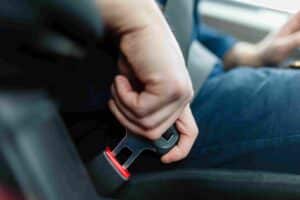
When filing a personal injury claim, the saying “the devil’s in the details” is true. The small things can have a huge impact on the outcome of your claim. One factor that is often overlooked is the use (or lack of use) of seat belts.
In Connecticut, as in many other states, seat belt laws are crucial in personal injury cases resulting from car accidents. Car accident lawyers in Connecticut understand the intricate relationship between seat belt usage and personal injury claims.
If you are involved in a personal injury claim involving the use of seat belts, our legal team at Jonathan Perkins Accident Lawyers can help. You can also learn how seat belt use impacts personal injury cases here.
The Legal Framework: Connecticut’s Seat Belt Laws
Connecticut has implemented strict seat belt laws to promote road safety and minimize the risks associated with car accidents. These laws can be divided into two key categories: primary enforcement and secondary enforcement.
Primary Enforcement
Connecticut’s primary enforcement seat belt law allows law enforcement officers to stop and ticket drivers or passengers solely for not wearing a seat belt. This means that a police officer can pull you over if they observe that you or your passengers are not wearing seat belts, even if there are no other traffic violations. The primary enforcement law applies to all vehicle occupants, regardless of age.
Secondary Enforcement
In contrast, some states’ secondary enforcement seat belt laws only permit officers to issue seat belt citations if they have stopped a vehicle for another violation and then discover seat belt non-compliance.
Connecticut had secondary seat belt laws for all backseat passengers under age 16. However, a new law was passed in 2021, which requires all backseat passengers to wear a seat belt.
For a free legal consultation, call 203-437-6190
The Impact on Personal Injury Cases
Knowing the laws in Connecticut is just the first step. It is also necessary to understand how the laws impact personal injury cases.
Negligence and Contributory Fault
Connecticut operates under a modified comparative negligence system. This means that in personal injury cases, including those arising from car accidents, the court will consider all parties’ fault. If the injured party is found to be partially responsible for their injuries, their compensation may be reduced in proportion to their degree of fault.
Failure to wear a seat belt can be considered contributory negligence in Connecticut. If an injured party was not wearing a seat belt at the time of the accident, and it is determined that doing so would have reduced the extent of their injuries, their compensation may be reduced.
Car accident lawyers in Connecticut must carefully navigate this aspect of the law, considering seat belt usage when building their case.
Comparative Negligence Threshold
Connecticut has a unique comparative negligence threshold. Under this system, if an injured party is found to be 50% or more responsible for their injuries, they may not recover any compensation.
Seat belt usage can significantly affect the calculation of this threshold. If the injured party’s failure to wear a seat belt is determined to be a substantial factor contributing to their injuries, it may tip the balance toward them being 50% or more at fault, potentially barring their recovery.

Can the Seat Belt Defense Be Used in Connecticut?
In Connecticut, plaintiffs can recover for the injuries that they sustain in a car accident so long as they are less than 51% responsible for what happened. One common way that insurance companies and defendants will try to argue that they are not liable for injuries is by claiming that the accident victim’s harm was caused by the fact that they were not wearing a seatbelt.
The concept of comparative negligence is applied to reduce the amount that a victim receives as financial compensation when they are partially to blame for their injuries. At some point, it would keep them from recovering at all if their actions were mostly responsible. The seatbelt defense argues that the larger share of the plaintiff’s injuries was caused by the fact that no seatbelt was used.
To use this defense effectively, the defendant must prove two key elements:
- Seat Belt Non-Usage: The defendant must demonstrate that the plaintiff was not wearing a seat belt during the accident. This can be established through witness testimony, police reports, or other forms of evidence.
- Causation: The defendant must also prove that wearing a seat belt would have significantly reduced the injuries sustained by the plaintiff. This often requires expert medical testimony to establish a direct link between the seat belt non-usage and the extent of the injuries.
Exceptions to Seat Belt Laws
Connecticut’s seat belt laws do have some exceptions. Understanding these exceptions is crucial for car accident lawyers in Connecticut when evaluating the impact of seat belt non-usage on a personal injury case. The primary exceptions include:
Medical Exemptions
Connecticut law provides for medical exemptions from seat belt requirements. If a licensed physician certifies that a person has a medical condition that prevents them from wearing a seat belt, that person may be exempt from the seat belt law.
Commercial Vehicles
Connecticut’s seat belt laws apply differently to commercial vehicles. While all passengers must wear seat belts in private passenger vehicles, the same rule does not apply to passengers in commercial vehicles like buses.
Click to contact our personal injury lawyers today
Strategies for Personal Injury Cases
Car accident lawyers in Connecticut must consider several strategies when handling cases where seat belt usage is a factor:
Investigate Thoroughly
A thorough investigation is critical in cases where seat belt usage is disputed. This includes gathering witness statements, examining police reports, and consulting medical experts to determine how much wearing a seat belt would have affected the injuries.
Consult Medical Experts
Medical experts play a pivotal role in establishing causation. They can provide expert testimony regarding the injuries sustained and whether wearing a seat belt would have made a significant difference. This testimony can be crucial in countering the seat belt defense.
Evaluate Comparative Negligence
Car accident lawyers should carefully evaluate whether seat belt non-usage could push the injured party over the comparative negligence threshold. If it does, it may impact the case’s potential outcome.
Negotiation and Settlement
Negotiation and settlement may be the best course of action in some cases. Car accident attorneys can use their knowledge of Connecticut’s seat belt laws as leverage during negotiations to secure favorable settlements for their clients.
Complete a Free Case Evaluation form now
Contact Jonathan Perkins Injury Lawyers for Legal Representation
Connecticut’s seat belt laws substantially impact personal injury cases arising from car accidents. Car accident lawyers in Connecticut must be well-versed in these laws and their implications when representing clients.
Seat belt usage, or the lack thereof, can be critical in determining liability and damages. Therefore, both plaintiffs and defendants need to understand how seat belt laws apply and how they can affect the outcome of a personal injury case.
Ultimately, promoting seat belt safety is not only a legal obligation but also a vital step in reducing the severity of injuries in car accidents and saving lives on Connecticut’s roads.
Those who have been injured in an accident and want to know their legal rights should consult with a motor vehicle accident attorney. The lawyer could advise them on how to handle making the claim to the insurance company. The attorney might then further help their client by negotiating on their behalf as they seek a settlement agreement that would pay them for the harm that they suffered from someone else’s negligence.